Oil Prices Today: Brent Near $85, WTI Near $80 as Hormuz Risk Keeps Crude Supported
Brent and WTI stayed close to Wednesday's highs early Thursday as traders kept a geopolitical risk premium in crude despite mixed U.S. inventory data.

NEWS / NEWS
Oil Prices Today: Brent Near $85, WTI Near $80 as Hormuz Risk Keeps Crude Supported
Brent and WTI stayed close to Wednesday's highs early Thursday as traders kept a geopolitical risk premium in crude despite mixed U.S. inventory data.
Thursday, July 16, 2026
By Jason Gilbert | Reviewed by Founder & CEO, Fox Energy Partners
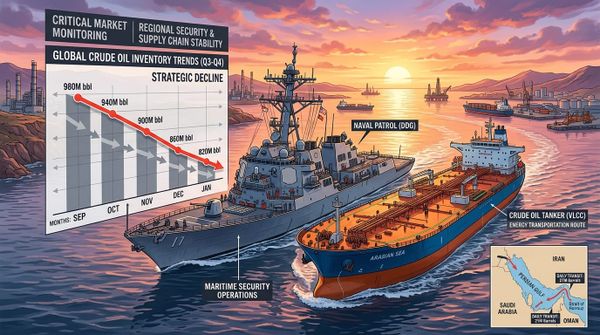
Oil prices were still holding near this week's highs early Thursday as traders kept a geopolitical risk premium in crude after several days of tension around shipping in the Strait of Hormuz. In early trading reported at 7:55 GMT on July 16, Brent crude was down 0.3% at $84.73 a barrel, while front-month WTI futures were flat at $79.62. On Wednesday, WTI settled at $79.60 and Brent settled at $84.95.
That leaves both benchmarks elevated even after the market paused following three straight days of gains. The immediate driver remains shipping risk and uncertainty over the next U.S.-Iran moves, not a clean shift in petroleum balances alone.
Key Takeaways
- +The Wall Street Journal: Oil Steadies After Gains But U.S.-Iran Tensions Remain High
- +The Wall Street Journal: Oil Edges Up Amid Uncertainty Over Next U.S.-Iran Moves
- +EIA Weekly Petroleum Status Report landing page
What the latest EIA data said
The Energy Information Administration's Weekly Petroleum Status Report, released July 15 for the week ended July 10, showed a mixed U.S. picture. Commercial crude inventories fell by 1.7 million barrels to 409.7 million. Gasoline inventories fell by 1.5 million barrels, distillate inventories rose by 4.6 million barrels, and total commercial petroleum inventories increased by 13.3 million barrels.
That report did not show a single clear tightening signal across the board. For now, the crude draw is supportive at the margin, but the broader tone is still being set by supply-route risk and trader caution around Hormuz.
What it means for U.S. investors and mineral owners
For U.S. investors, the main takeaway is that the market is still paying up for disruption risk even without a fresh settlement breakout above Wednesday's close. Higher crude can help cash-flow expectations for producers and support energy equities, but price sensitivity will vary by company balance sheets, hedge books, transport exposure, and product mix.
For U.S. mineral owners, Brent is best read as a global risk barometer rather than a direct royalty formula. Royalty checks are more directly tied to lease terms, production volumes, timing, deductions, and the local pricing basis received for the barrels or gas actually sold, with WTI-linked and regional benchmarks often more relevant than Brent.
Direct sources
- The Wall Street Journal: Oil Steadies After Gains But U.S.-Iran Tensions Remain High
- The Wall Street Journal: Oil Edges Up Amid Uncertainty Over Next U.S.-Iran Moves
- EIA Weekly Petroleum Status Report landing page
- EIA Weekly Petroleum Status Report summary PDF
- EIA Weekly Petroleum Status Report Table 1 PDF
Trust & Review
- Author: Jason Gilbert
- Reviewer: Founder & CEO, Fox Energy Partners
- Last updated: 7/16/2026
- Workflow: hybrid