USA Strategic Petroleum Reserve Hits 1983 Lows: What 56 Percent Empty Means for Investors
Inventory levels in the U.S. Strategic Petroleum Reserve have dropped to 319 million barrels. We examine the security risks and investment implications of a 56 percent empty stockpile.

NEWS / NEWS
USA Strategic Petroleum Reserve Hits 1983 Lows: What 56 Percent Empty Means for Investors
Inventory levels in the U.S. Strategic Petroleum Reserve have dropped to 319 million barrels. We examine the security risks and investment implications of a 56 percent empty stockpile.
The U.S. Strategic Petroleum Reserve (SPR) has officially dropped to approximately 319 million barrels, leaving roughly 56 percent of its total storage capacity vacant. This inventory level marks the lowest point for the federal emergency stockpile since April 1983, a milestone that has reignited debates among policymakers and energy investors regarding national security and the future role of the reserve.
Key Takeaways
- +The Changing Role of the Reserve
- +Investor Considerations
The Changing Role of the Reserve
For decades, the SPR was viewed as the ultimate insurance policy against global supply shocks. However, the energy landscape has shifted dramatically. As the United States has solidified its position as the world's leading oil producer and a consistent net exporter, some analysts argue that the SPR's traditional utility is evolving. Rather than a static buffer for absolute scarcity, the government has increasingly used the reserve as a tool to mitigate price volatility.
Operational Hurdles and Replenishment Realities
Beyond the headline-grabbing volume statistics, the Department of Energy (DOE) faces significant operational headwinds. The infrastructure—composed of aging salt caverns along the Gulf Coast—requires extensive maintenance. Furthermore, the decision to restock the reserve is no longer purely strategic; it is a complex negotiation against high market prices, the domestic demand for specific grades of crude oil, and the logistics of federal procurement.
Investor Considerations
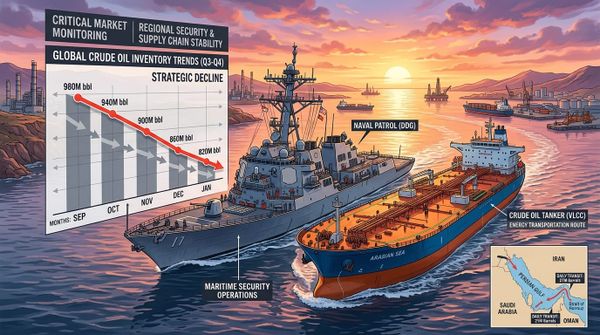
For accredited investors, the current depletion levels signal a tightening of the margin of error in global energy markets. While the SPR retains significant operational capacity, a smaller buffer implies that domestic prices may become more sensitive to geopolitical events in the Strait of Hormuz or other critical chokepoints. As the administration looks to replenish stocks, potential buy-side pressure could create unique dynamics in the WTI crude market.
Trust & Review
- Author: Christian Rosenblum
- Reviewer: Managing Editor
- Last updated: 7/13/2026
- Workflow: hybrid