Oil Prices Today: Brent Settles at $88.10, WTI at $82.49 as Hormuz and Red Sea Risks Lift Crude
As of Saturday, July 18, 2026, the cleanest verified oil benchmarks are Friday's settlements: Brent at $88.10 and WTI at $82.49, with traders focused on Hormuz and Red Sea shipping risk.
NEWS / NEWS
Oil Prices Today: Brent Settles at $88.10, WTI at $82.49 as Hormuz and Red Sea Risks Lift Crude
As of Saturday, July 18, 2026, the cleanest verified oil benchmarks are Friday's settlements: Brent at $88.10 and WTI at $82.49, with traders focused on Hormuz and Red Sea shipping risk.
By Jason Gilbert
Founder & CEO, Fox Energy Partners
As of Saturday, July 18, 2026, the cleanest verified oil benchmarks are Friday's settlements because crude futures are between sessions for the weekend. Brent crude futures settled at $88.10 a barrel on Friday, July 17, while U.S. West Texas Intermediate crude futures settled at $82.49 a barrel.
Reuters reported Brent rose $3.87, or 4.59%, and WTI gained $3.54, or 4.48%, in the Friday session. Both benchmarks finished the week up about 16% as traders priced in renewed U.S.-Iran hostilities across the Gulf and the added risk that Red Sea shipping could face further disruption on top of already restricted traffic through the Strait of Hormuz.
Key Takeaways
- +Reuters syndication via Investing.com: Oil settles up on renewed U.S.-Iran hostilities and threat of Red Sea closure
- +U.S. Energy Information Administration: World Oil Transit Chokepoints
Why the market reacted
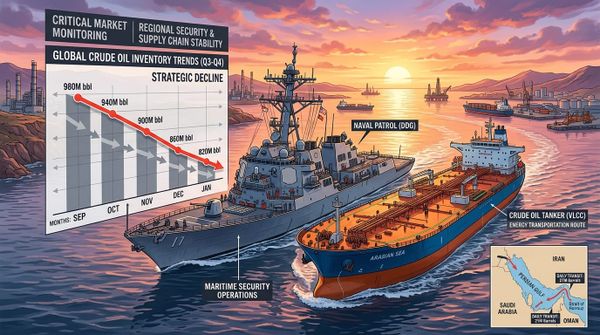
The Strait of Hormuz remains the world's most important oil transit chokepoint. The U.S. Energy Information Administration said total oil flows through Hormuz averaged 20.9 million barrels per day in the first half of 2025, equal to about 20% of global petroleum liquids consumption and roughly one-quarter of maritime-traded oil.
The same EIA analysis said an estimated 4.2 million barrels per day also moved through the Bab el-Mandeb Strait in the first half of 2025. That matters because any Red Sea disruption can lengthen voyages, reduce available tanker capacity, and raise freight and insurance costs even before a physical supply loss shows up in inventory data.
What it means for U.S. investors and mineral owners
For U.S. investors, higher crude can support sentiment and near-term cash-flow expectations for upstream producers and oilfield-service names if the move holds when futures reopen. The next question is whether this weekend's geopolitical premium fades quickly or becomes a more durable part of the market next week.
For mineral owners, higher headline crude prices can be supportive if they persist, but royalty income does not move one-for-one with Brent. Realized prices at the lease level also depend on the benchmark tied to the contract, local basis differentials, transport deductions, production volumes, and the terms written into the lease or royalty agreement.
Bottom line
Saturday's oil story is a carry-forward from Friday's settlement: Brent at $88.10 and WTI at $82.49, with both benchmarks up about 16% for the week. The key market watchpoint is whether shipping risk around Hormuz and the Red Sea eases before futures trading resumes.
Sources
- Reuters syndication via Investing.com: Oil settles up on renewed U.S.-Iran hostilities and threat of Red Sea closure
- U.S. Energy Information Administration: World Oil Transit Chokepoints
Trust & Review
- Author: Jason Gilbert
- Reviewer: Founder & CEO, Fox Energy Partners
- Last updated: 7/20/2026
- Workflow: hybrid